
International B2B Visibility: Strategy, SEO and AI Answer Visibility for New Markets
A structural insight on Market & Search Intelligence, SEO, AI Answer Visibility, language, competitors and market readiness in international B2B
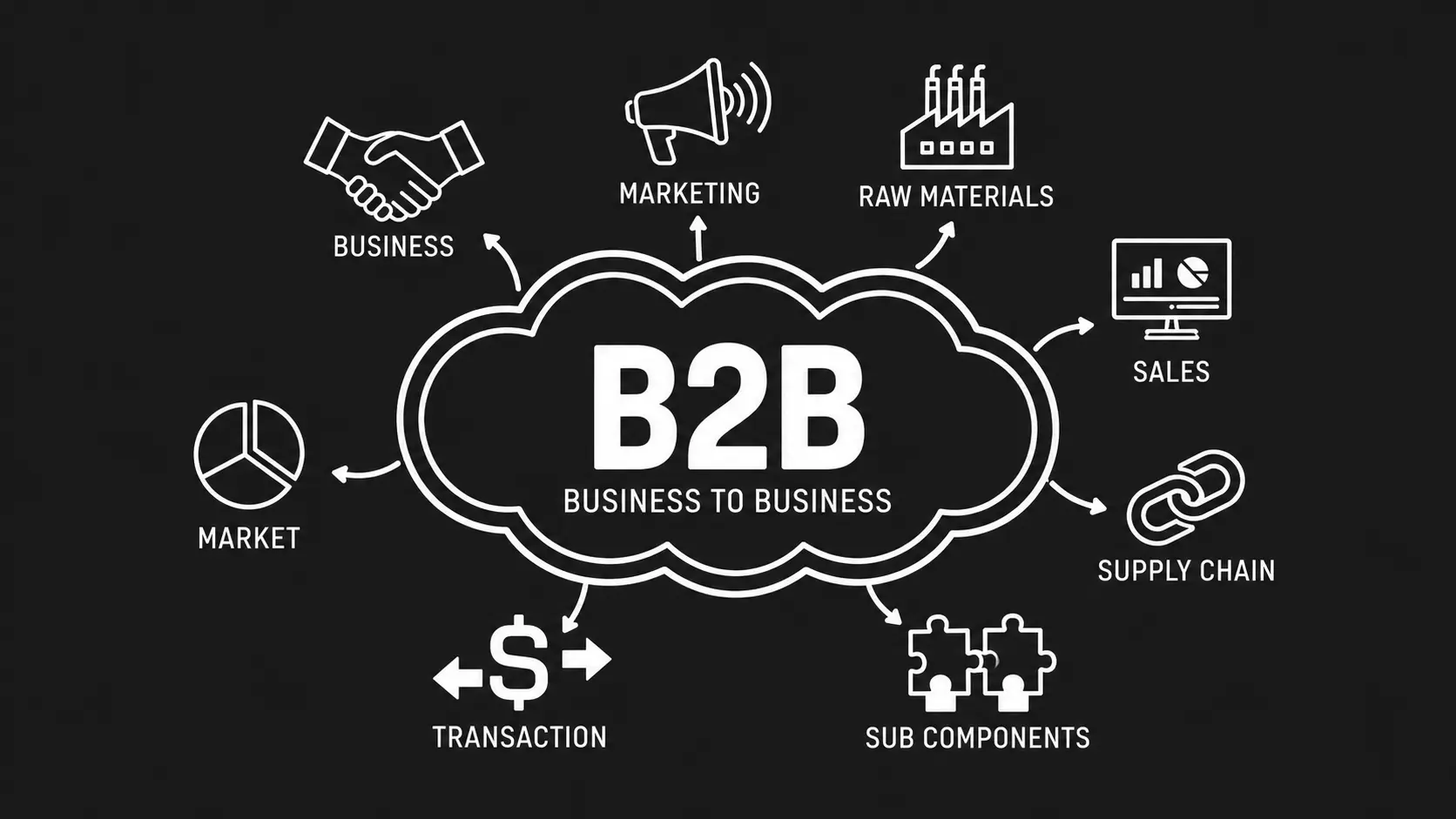
Companies that start building international visibility only when the market is already making decisions often arrive too late.
International B2B visibility is therefore not a downstream marketing measure. It is an early part of market readiness.
A company must be findable, understandable and relevant in the target market before buyers, partners, procurement teams or AI systems create a shortlist.
In short: International B2B visibility does not only mean that a website can be found. It means that a company is recognizable as a relevant option in the right market, in the right language, for the right problem and within the right decision environment.
Practical service pages for this topic
- B2B Visibility in Mercosur — overview page for companies that want to become visible in Google, AI tools and local search environments in Mercosur.
- B2B Visibility Report — analysis format for checking where a company is visible, missing or misclassified.
- B2B Provider Visibility — build the pages, partner references and market proof needed after the report.
- B2B Visibility Monitoring — track whether visibility improves, weakens or shifts to competitors.
- B2B Visibility Report Demo — see a sample report with fictional data and real methodology.
1. Executive Summary
Many B2B companies still treat international visibility as a downstream marketing task.
First comes the market. Then sales. Then the website is translated. Then SEO, LinkedIn, content or AI answer visibility follow.
That sequence is often too late.
In international B2B markets, selection, trust and shortlisting already emerge before direct contact. Decision-makers research independently, compare suppliers, check industry sources, review LinkedIn profiles, use Google and ask AI systems.
The strategic question is therefore not only:
Can we serve this market?
The better question is:
Are we recognized as a relevant solution in this market before a conversation even begins?
If the answer is no, the company is not only missing visibility. It is missing part of its market readiness.
2. Context: Market Presence Is Not the Same as Market Visibility
A company can be active in a country, have customers there, sell through partners or be technically capable of supplying the market.
And still barely appear in the digital decision environment.
This is especially common when international B2B visibility is reduced to isolated channels:
- a translated website
- a few international SEO keywords
- a distributor in the target market
- a LinkedIn profile
- a few generic industry terms
These elements can help. But they are not enough if they are not embedded in a clear market logic.
International B2B visibility only emerges when market understanding, language, search behavior, competitive context, buyer problems and digital proof structures fit together.
3. Diagnostic Question
This insight is built around one central diagnostic question:
Is the company independently visible, understandable and relevant in the target market — or does it exist only as a translated, weakly anchored brand?
This question is not only relevant for marketing teams.
It affects market entry, partner selection, demand validation, competitive analysis, AI answer visibility, commercial due diligence and business development.
4. What Needs to Be Checked
International B2B visibility cannot be assessed through a single ranking or a single AI answer.
A more useful approach is to check several practical areas:
| Area | Diagnostic question |
|---|---|
| Market logic | Does the offer match real problems, buying motives and decision structures in the target market? |
| Search Visibility | Does the company appear for relevant non-branded searches in the target market? |
| AI answer visibility | Is the company correctly mentioned, recommended or referenced in AI-generated answers? |
| Language and context signal | Does the content sound like local industry and market discourse — or like a translation? |
| Competitive environment | Which suppliers, distributors, platforms or sources dominate perception? |
| Buyer Problem Fit | Which concrete problems does the B2B product solve in the target market? |
| Geographic visibility | Does the company need to be visible nationally, regionally, locally or within an industry region? |
| external proof structure | Which external sources, industry directories, references and signals confirm the company's market role? |
The purpose of this analysis is not to produce “more content”.
The purpose is to understand whether a company is correctly understood and positioned as a relevant solution in the target market.
By external proof structure, we mean independent sources such as industry directories, media, partner pages, references or platforms that confirm the company's role in the market.
Practical application
If a company already has a website, a real offer, export capability or distributors, but does not generate qualified digital inquiries in the target market, the question becomes concrete: where is the company visible, where is it missing, and who is visible instead?
For a first diagnosis, use the Visibility Check for International B2B Markets. For a fuller service format, see the B2B Visibility Report or the demo report.
5. Methodology
A reliable assessment of international B2B visibility combines classic SEO analysis with market analysis and AI answer testing.
This includes:
- Google and Google result checks for core market and product questions
- non-branded searches in the relevant target languages
- AI answer testing for buyer, advisor and procurement scenarios
- competitive and source landscape mapping in the target market
- analysis of local terminology, tone and industry language
- review of third-party sources, industry sources, LinkedIn and directories
- assessment of whether website, snippet, H1, URL and internal links match the search and decision logic
The analysis does not treat keywords in isolation. It treats them as market signals.
A search query does not only show what someone is looking for. It shows how a market formulates a problem.
6. Key Findings
Finding 1: Visibility starts before sales
Many B2B companies only become active once a market is already being addressed commercially.
By that time, buyers, partners and competitors have often already shaped the digital decision environment.
Companies that start building visibility at that stage do not only need to be found. They also have to work against already established interpretations of the market.
Finding 2: SEO and AI answer visibility are not enough on their own
SEO and AI answer visibility matter. But they do not automatically solve the strategic problem.
A company can be technically well optimized and still appear in the wrong context.
Typical weaknesses include:
- The offer is explained too generically.
- The local buyer value remains unclear.
- The language reads as translated, not market-anchored.
- Competitors occupy the relevant problem terms.
- AI systems do not recognize the brand as a suitable solution.
International visibility therefore requires not only search-engine understanding, but market understanding.
Finding 3: Language is not a translation channel
International B2B visibility often fails because of linguistic nuance.
A German term cannot always be transferred cleanly into English, Spanish or Portuguese. Even if the translation is correct, the market logic may differ.
A term can sound technical in one country, commercial in another, and too generic or too local in a third.
That is why every important target page should be reviewed by language and market:
- Which terms do buyers actually use?
- Which institutions, sources and competitors appear?
- Which follow-up questions emerge?
- Which tone sounds professionally credible?
Semantic localization is more than translation. It is adaptation to meaning systems.
Finding 4: Competitors define the visible market
In many international B2B markets, the most important finding is not whether a company is visible.
The more important question is who is visible instead.
That may include local competitors, distributors, trading platforms, industry directories, media, associations or advisory sources.
These actors shape how the market is understood by both people and machines.
If a company does not appear there, it is not only missing reach. It is missing a place in the market interpretation.
Finding 5: AI answer visibility depends on existing proof
AI systems do not invent stable market positions out of nothing.
They reconstruct suppliers, topics, sources and authority from existing signals.
For international B2B companies, this means:
- The brand must be clearly connected to a service, industry and region.
- The website must contain individual, citable sections.
- External sources must confirm the company's market role.
- Language, company information and internal links must be consistent.
- AI prompt tests must be checked separately by language, market, buyer context and platform.
A mere mention in an AI answer is not yet strong visibility.
What matters is whether the company is correctly understood and recommended in the right decision context.
Finding 6: Visibility must be built with the right geography
Not every B2B offer needs the same visibility architecture.
A supplier of industrial equipment may need national visibility. A supplier for mining, energy, logistics or agribusiness often needs regional or regional or sector-specific visibility.
In some markets, the relevant question is not:
Are we visible in Argentina?
But rather:
Are we visible where procurement, project development, industry, logistics or technical decision-making actually takes place?
7. What International B2B Visibility Requires
International B2B visibility is an interdisciplinary field.
It requires more than good SEO and more than classic content production.
| Requirement | Why it matters |
|---|---|
| Market Intelligence | Without market understanding, visibility remains abstract and often detached from real demand. |
| Search Intelligence | Search queries, Google results and snippets show how the market formulates problems and sorts suppliers. |
| AI answer visibility | AI systems must be able to recognize the brand correctly as a relevant company information, source or solution. |
| Linguistic nuance | International visibility depends on whether terms, tone and industry language work in the target market. |
| Competitive analysis | It must be clear which suppliers, sources and platforms already control the visible market. |
| Buyer-problem understanding | The product must not only be described. It must solve a concrete problem in the target market. |
| Geographic prioritization | Depending on the sector, national, regional, local or regional or sector-specific visibility may matter most. |
| Strategic evaluation | It must be decided which visibility strategy is worth pursuing — and which only creates effort without market impact. |
8. Risk Assessment
When international B2B visibility is built incorrectly, several risks emerge at the same time.
- The company is only found for branded searches.
- Competitors occupy the relevant problem and category terms.
- AI systems do not mention the brand or classify it incorrectly.
- Local distributors or platforms become more visible than the manufacturer itself.
- The language is correctly translated but not market-competent.
- The website does not answer real buyer follow-up questions.
- The company invests in markets where demand, timing or positioning have not been validated.
Visibility in the wrong place does not create market readiness.
9. Strategic Recommendations
1. Start with market logic, not content
Before any international visibility strategy is built, it should be clear how the target market works: demand, buyer groups, competitors, distribution logic, industry structure and decision paths.
2. Read search queries as market signals
Keywords are not only SEO data. They show how buyers name problems, which terms are commercially relevant and which suppliers are already visible.
3. Check decision logic separately for each language
German, English, Spanish and Portuguese do not automatically produce the same search and AI answers. Each language needs its own queries, fan-out questions, examples and source checks.
4. Structure visibility by market geography
A company needs to decide whether it must be visible nationally, regionally, locally or within a specific industry region. This depends on the product, the sales model and buyer reality.
5. Map competitors and the source ecosystem
The central question is: Who already explains the market? Who appears on Google? Who is named by AI systems? Who is referenced? Who dominates LinkedIn, directories, industry media or local platforms?
6. Build clear page sections
Every important page should contain clear, standalone sections: What is the offer? Who is it relevant for? Which decision does it support? Which data, sources or observations support the assessment?
7. Measure AI answer visibility separately
AI answer visibility should not be treated as a single value. Relevant differences emerge by language, market, platform, model, user context, account type and prompt formulation.
8. Connect visibility to commercial decision-making
The most important question is not whether more visibility is possible.
The most important question is whether that visibility supports a meaningful market decision.
10. Before / After
Before
- Translated website without clear market logic
- SEO as a downstream marketing measure
- Weak visibility for non-branded searches
- Unclear AI answer visibility
- Competitors and local sources dominate perception
- No clear decision on whether national, regional or local visibility is required
After
- Market-specific visibility architecture
- Combination of Market Intelligence, SEO, AI answer visibility
- Clear positioning by buyer problem and target market
- Language-specific queries, examples and source logic
- Stronger external proof structure through website, third-party sources and internal links
- Visibility as part of commercial market readiness
11. Strategic Conclusion
International B2B visibility is not an add-on.
It is part of market readiness.
A company must not only be able to deliver. It must appear as a relevant, understandable and credible solution in the right decision environment.
That requires more than SEO, more than AI answer visibility and more than translation.
It requires Market & Search Intelligence: the connection between market understanding, search behavior, language, competitive context, AI answer visibility, proof standards and commercial decision logic.
The decisive question is not whether a company can become internationally visible. The decisive question is whether it is visible before the market creates its shortlist.
Relevant VolzMarketing pages
- B2B Visibility in Mercosur — for European and North American B2B companies that want to be found in Mercosur markets.
- B2B Visibility Report — structured analysis of Google visibility, AI answers, competitors and external market references.
- B2B Provider Visibility — build the pages, references and partner signals needed to be recognized as a provider.
- B2B Visibility Monitoring — keep checking Google results, AI answers, competitors and new buyer questions.
- B2B Visibility Report Demo — example report with fictional data and real methodology.
- Visibility Check for International B2B Markets — practical diagnosis for existing websites and offers.
- Market & Search Intelligence — connect search behavior, market logic and digital visibility.
- AI Search Visibility Analysis — assess mentions, recommendations and correct classification in AI tools.
- Distributor Trap Mercosur — why distributors can become more visible than the manufacturer.