
Brazil’s AI Adoption Creates a New Visibility Problem for European Exporters
Why high AI usage in Brazil does not automatically mean demand — but still changes how international suppliers are found, interpreted and shortlisted across South America.
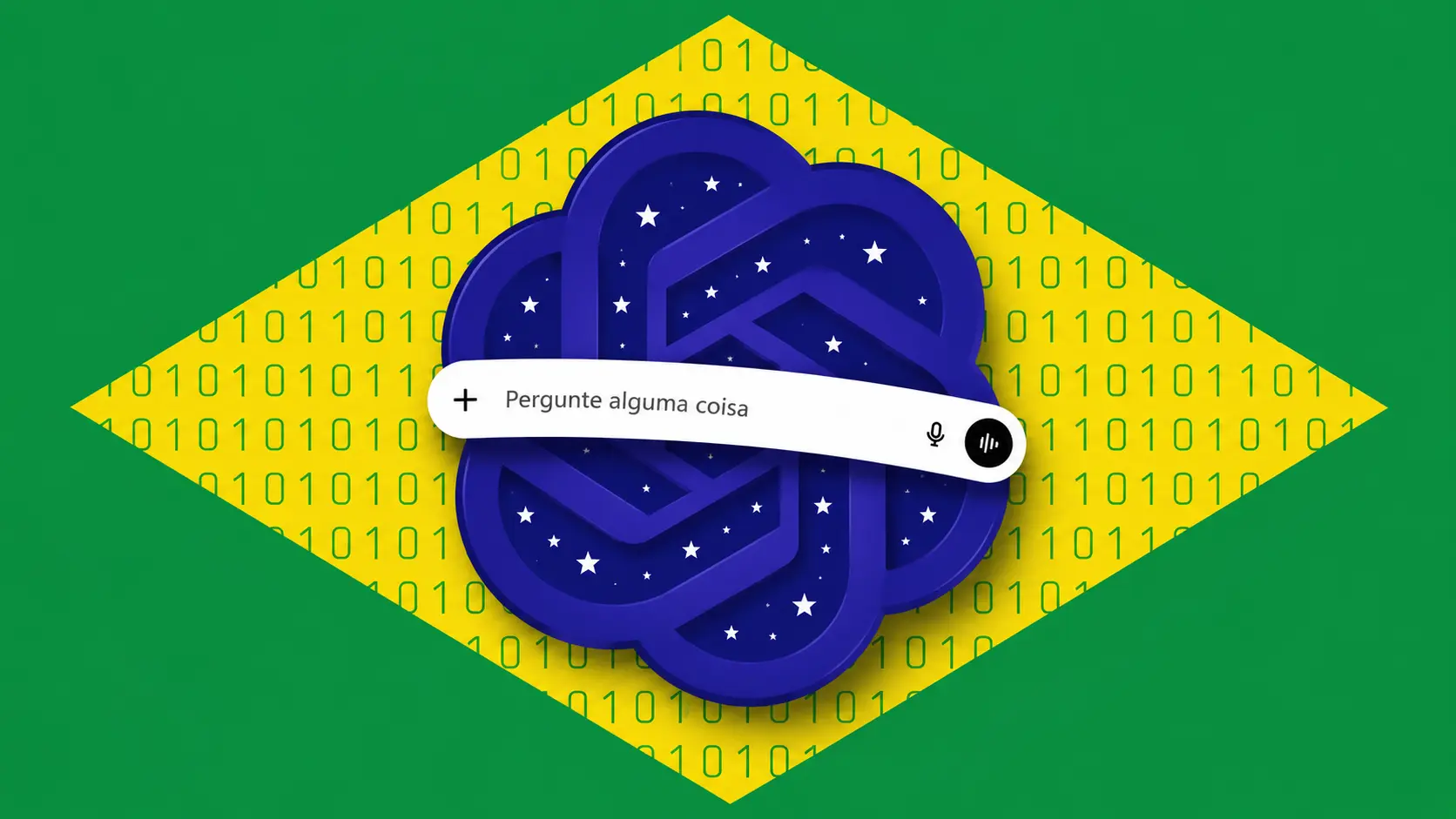
Brazil is becoming one of the most visible AI markets in the world. For European exporters, this is less a pure technology story than a new visibility and interpretation problem.
As AI systems, search engines and digital research increasingly shape how suppliers are found, understood and compared, international companies can lose visibility long before a traditional sales conversation even starts.
Key Facts on ChatGPT Usage in Brazil
Source Note on the Brazil Data
The figures and regional signals referenced here are based on Brazilian reporting about OpenAI data released in August 2025. Tecnoblog reported roughly 140 million daily ChatGPT messages from Brazil and its top-three global position. Exame listed leading states such as São Paulo, Distrito Federal and Santa Catarina, alongside other visible states including Tocantins, Rio de Janeiro, Ceará, Paraná, Amapá, Mato Grosso and Pernambuco.
The Market Signal: AI Adoption Changes Early Supplier Perception
The real market signal is not simply that Brazil generates many ChatGPT messages. The more important point is that AI usage reflects changing information behavior, earlier supplier comparisons and new digital pre-selection processes.
For European exporters, this means Brazil is no longer interpreted only through trade channels, local contacts or industry events. It is increasingly interpreted through search engines, AI systems, digital sources, Portuguese terminology and regional comparison logic.
This is not direct proof of demand. It is a signal that digital visibility starts to matter earlier in the decision process — before a buyer visits a website, contacts a distributor or places a supplier on a shortlist.
Why the Regional Data Matters Strategically
Many international companies still read Brazil primarily through São Paulo. The published AI usage data suggests a more differentiated picture.
If states such as Tocantins or Amapá appear in usage patterns, that does not automatically mean strong purchasing power or immediate B2B demand. It does show that digital research, AI usage and market exploration are spreading more widely across regions than many exporters assume.
That is what makes this development strategically interesting: South America’s digital market interpretation may regionalize faster than traditional export structures.
| Signal | Strategic Reading | What Should Not Be Inferred |
|---|---|---|
| High ChatGPT usage | Digital research and AI-assisted information seeking are becoming more important. | It does not directly prove concrete purchase demand. |
| Usage beyond classic business centers | Information spaces may be broader than traditional export and distribution logic. | It does not prove that smaller regions are automatically attractive B2B target markets. |
| Brazil as a top-three market | Brazil is a relevant test case for AI Visibility and Search Intelligence in South America. | It does not automatically apply equally to every industry or supplier. |
| AI as a research layer | Suppliers need to be described clearly enough for AI systems to recognize their role. | AI does not replace market analysis, distributor review or commercial due diligence. |
Buyer-Uncertainty Evidence Layer: What European Exporters Are Actually Unsure About
Segment Vocabulary
European exporters are not just asking whether “AI is growing in Brazil.” Their real questions are more specific: Is Brazil digitally mature enough for our industry? Are B2B suppliers researched online there? Which regions matter? Is a distributor enough? Are we understandable in Portuguese? And do we even appear in AI systems and search results as a relevant supplier option?
Comparison Logic
The relevant comparison is not “Brazil uses a lot of AI” versus “Brazil uses little AI.” The relevant comparison is traditional export logic versus digital supplier perception. A company may be present in the market through partners, yet remain almost invisible in Google, AI systems, local industry sources or Portuguese search contexts as an independent supplier.
Proof Layer
The published ChatGPT data does not prove demand. But it does provide a strong reason to take Brazil seriously as a digital interpretation market. High usage, regional spread and growing AI-assisted research all reinforce the question of whether European suppliers are recognized at all in Brazilian search and answer systems.
Business Implication: Which Companies Are Most Affected
This visibility problem affects above all companies whose position in Brazil does not come from pure brand recognition, but from complex products, partner structures, technical applications or industry-specific search logic.
| Target Group / Industry | Typical Buyer Uncertainty | Critical Visibility Check |
|---|---|---|
| B2B manufacturers in machinery and industrial equipment | Is the manufacturer itself visible, or only a local dealer, importer or distributor? | Check Portuguese search queries, local supplier lists, distributor mentions and AI answers. |
| Mining, lithium, energy and infrastructure suppliers | Is the company understood as a relevant solution for specific projects, applications or supply chains? | Check sector terminology, project context, technical use cases and local sources in Brazil and South America. |
| Agritech, food, chemicals, pharma and automotive suppliers | Is the supplier role clearly understood in Brazil, or hidden behind product categories and intermediaries? | Review segment pages, regulatory terminology, local use cases and regional comparison logic. |
| Software, SaaS and digital B2B providers | Is the offer recognized in Brazil as an international solution, a local option or not as a relevant category at all? | Check Portuguese category terms, AI visibility, competitor comparisons and local search intent. |
Relevant Industry Clusters
A serious visibility review should not assess Brazil only at country level. It should be tested against the relevant sector, application and buyer logic.
The Core Misunderstanding: AI Adoption Is Not a Demand Map
These numbers do not mean that new B2B demand is suddenly appearing everywhere.
High AI adoption primarily shows that information behavior, market interpretation and supplier research are changing. International buyers, local partners, technical purchasers and market observers increasingly use search engines and AI systems in parallel.
That creates a new problem: many European suppliers are operationally export-ready but digitally weakly interpretable.
A company can deliver products and still barely appear as a supplier online.
Local partners often make the distributor visible — not the manufacturer.
Many international websites fail to explain sector context, local applications or market relevance.
AI systems do not automatically create demand, but they do influence pre-selection and perception.
Why This Matters for European Exporters
International suppliers are no longer competing only through product quality, distribution or trade show presence.
They are increasingly competing through how clearly search engines and AI systems can understand their role in the market.
When a Brazilian user searches for industrial equipment, mining solutions, agritech or technical components, early supplier impressions often form long before any direct contact takes place.
If a company is invisible or poorly interpreted there, it may never become part of the initial market consideration set.
Related VolzMarketing Pages
This analysis connects with other VolzMarketing pages on Brazil, Mercosur market entry, B2B visibility and Search Intelligence.
Brazil Is the Most Visible Example Here — Not the Only One
Brazil works as the reference market mainly because comparatively concrete public data on AI usage is available there.
But the underlying development is broader. In other Mercosur and South American markets too, AI systems, search behavior and digital research increasingly shape how international suppliers are perceived.
This matters especially in markets with:
- strong distributor structures
- fragmented industry clusters
- large regional differences
- high import dependence
- growing digital information spaces
Why Search Intelligence and Market Intelligence Are Converging
This development shows that market analysis and digital visibility should no longer be treated separately.
Market Intelligence explains how markets work. Search and AI Visibility show how those same markets are digitally interpreted.
In South America, that difference can be decisive: a company may be active in the market in real terms — and still barely appear as a relevant supplier option in the digital layer.
The strategic question is therefore no longer only:
“Can we export to Brazil or South America?”
But also:
“Are we even being recognized in these markets as a relevant option?”
How Companies Should Assess Their Visibility in Brazil and South America
A serious assessment should not start with the assumption that high AI usage automatically means an attractive market. It should start with the question of whether a supplier appears at all in the relevant search, industry and AI contexts.
| Assessment Layer | Key Question | Why It Matters |
|---|---|---|
| Market logic | Which industries, regions and buyer groups are actually relevant? | Prevents Brazil from being treated as a homogeneous market. |
| Search Visibility | Is the company visible for Portuguese and locally relevant search queries? | Shows whether the supplier role is digitally visible. |
| AI Visibility | Do ChatGPT, Gemini, Claude or Perplexity mention the company in typical market questions? | Shows whether the company appears in early research phases. |
| Distributor signals | Do local partners strengthen the manufacturer brand or obscure it? | Critical for suppliers working through dealers, importers or integrators. |
| Regional interpretation | Are São Paulo, southern Brazil, central Brazil and other regions being differentiated properly? | Helps separate real market opportunities from generic traffic or AI signals. |
Relevant Service Pages
For companies that want to assess Brazil or South America not just as export destinations but as search, visibility and interpretation spaces, these pages are particularly relevant.
Frequently Asked Questions About AI Adoption in Brazil and B2B Visibility
How many ChatGPT messages come from Brazil each day?
Based on published OpenAI data, around 140 million ChatGPT messages per day came from Brazil. This figure refers to messages or interactions, not uniquely identified individual users.
Which Brazilian states show especially high ChatGPT usage?
Reported states include São Paulo, Distrito Federal, Santa Catarina, Tocantins, Rio de Janeiro, Ceará, Paraná, Amapá, Mato Grosso and Pernambuco. Publicly robust city-level comparisons, such as São Paulo versus Belo Horizonte, are not available.
Why is Brazil’s AI adoption relevant for European exporters?
Because AI systems and search engines increasingly influence how suppliers are found, understood and shortlisted. This is especially relevant for B2B suppliers that depend on partner structures, distributors and local market interpretation in Brazil and South America.
Does high AI usage in Brazil automatically mean high B2B demand?
No. AI usage is not direct proof of demand. But it is a signal that information behavior, market interpretation and supplier research are becoming more digital and more AI-assisted.
Why focus on Brazil if the broader point is South America?
Brazil is used as the anchor market because comparatively concrete public data on ChatGPT usage is available there. But the strategic observation goes further: in other Mercosur and South American markets as well, AI, search and digital pre-selection are reshaping supplier perception.
What should companies check first?
The first step is to check whether the company is visible in relevant market, industry, product and supplier questions — in Google, AI systems, local sources, partner structures and regional search contexts.

Assess International Visibility in South America More Realistically
VolzMarketing helps companies evaluate market structure, digital visibility, AI mentions and regional market logic across Mercosur and South American markets more realistically.
Request an Analysis