
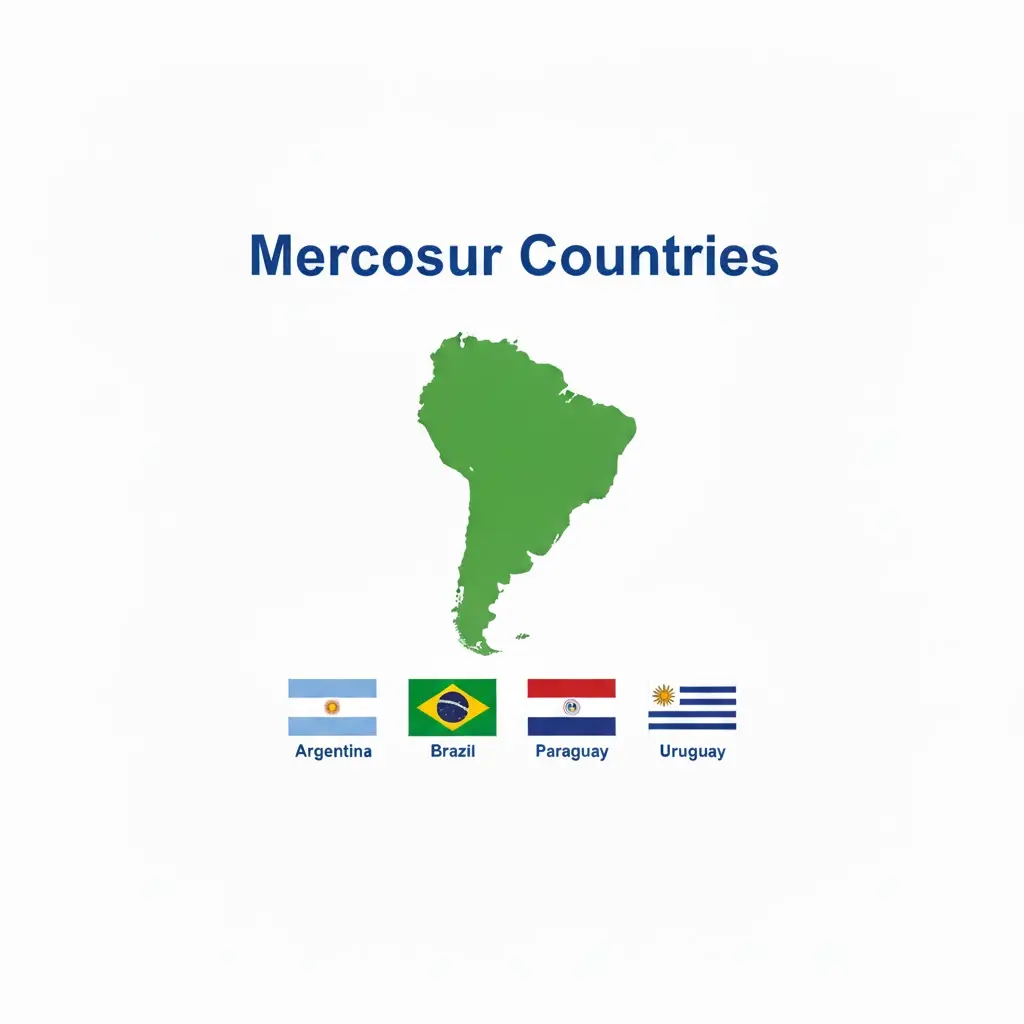
Mercosur Countries: Different Market Realities, Same Service Logic
Country-specific Market & Search Intelligence for companies evaluating Argentina, Brazil, Paraguay and Uruguay as separate market situations — not as one generic regional block.
The useful question is not “Which Mercosur country sounds attractive?” but which country fits the company’s sector, buyer logic, partner path, language layer and visibility problem.
What matters in practice
- Which country fits the offer, sector and buyer logic?
- Where are realistic buyers, partners, distributors or institutions?
- Which market assumptions should be checked before budget is committed?
- How do language, visibility, pricing and trust signals differ?
- Which next step is useful before a broader market-entry push?
inside the Mercosur lens
Spanish and Portuguese
applied country by country
strategy assumptions
Mercosur market entry becomes concrete at country level
Argentina, Brazil, Paraguay and Uruguay are not four versions of the same market.
Country selection changes buyer access, language, pricing, partner logic, import conditions, proof requirements, competition and visibility. A company can be relevant in Mercosur as a region and still choose the wrong first country.
The country layer is where broad market potential turns into a practical decision. Brazil may offer scale but also complexity. Argentina may offer sector depth but requires volatility management. Paraguay may fit distribution or agriculture-related cases. Uruguay may help with focused, stable or regional coordination logic.
How VolzMarketing reads the country layer
The countries are not separate products. They are country lenses for the same VolzMarketing service system: market reading, search visibility, partner logic, buyer understanding and next-step prioritization.
Market Reality Check
Assessment of whether the country actually fits the company’s offer, sector, buyer layer, price logic and operational assumptions.
Market and demand reading
Country-specific reading of demand signals, competitors, visible alternatives, sector structure and market-entry constraints.
Buyer and partner logic
Evaluation of whether buyers, distributors, partners, institutions, importers or local channels are realistic for the company’s situation.
Search and AI visibility
Review of whether the company, category and offer are understandable in local-language search results and AI-assisted market research.
Trust and proof signals
Identification of missing references, sources, pages, documents, local-language signals or credibility markers needed before outreach.
Recommended next step
Clear guidance on whether to validate demand, map partners, improve visibility, adapt positioning or postpone market-entry spending.
Four countries, four different market logics
The country pages should help companies avoid a generic Mercosur reading and compare where a concrete offer may be understood, trusted and considered first.
Brazil as a Mercosur market-entry country
Brazil can be the scale anchor for machinery, industrial equipment, agriculture, technology, healthcare, automotive and consumer-related sectors. It also requires Portuguese visibility, regional reading, stronger local proof and a realistic view of competition and regulation.
Assess Brazil market-entry logic →Argentina as a Mercosur market-entry country
Argentina can be relevant for energy, Vaca Muerta, mining, lithium, agribusiness, food processing, software and selected industrial sectors. The country can offer strong sector depth, but volatility, import conditions, pricing and timing need careful prioritization.
Assess Argentina market-entry logic →Paraguay as a Mercosur market-entry country
Paraguay may matter through agriculture, soy, beef, logistics, import and distribution logic, selected production cases and regional positioning. It is not simply “small”; it needs a focused view of buyer depth, channel capacity and service expectations.
Assess Paraguay market-entry logic →Uruguay as a Mercosur market-entry country
Uruguay is smaller, but can be relevant for focused B2B cases, agriculture, beef, dairy, forestry, logistics, technology services, premium positioning, testing and regional coordination. It is useful when expectations remain aligned with market size.
Assess Uruguay market-entry logic →What country prioritization should clarify
The country decision should reduce uncertainty before a company invests in translation, outreach, partner search, trade-fair activity or a larger market-entry process.
Sector-country fit
Which country best matches the company’s sector, application, buyer type and price position?
Buyer layer
Are the relevant buyers operators, distributors, importers, cooperatives, OEMs, retailers, industrial firms, institutions or service partners?
Language and visibility
Does the company need Spanish, Portuguese or both, and is it visible in the local search and AI context where buyers research?
Partner and channel path
Which market requires direct outreach, distributor logic, local partners, representatives, service capacity or institutional access?
Trust and proof
Which references, documents, technical signals, market sources or public proof elements are missing before first contact?
Commercial next step
Should the company validate demand, sharpen positioning, improve search visibility, map partners or choose a narrower first market?
What this country lens does — and what it does not do
The country lens supports strategic market reading, not legal or operational execution.
VolzMarketing helps companies decide which country logic deserves attention, which assumptions should be checked and which visibility or partner gaps should be fixed. It does not provide tax structuring, company incorporation, legal advice, customs handling, visa support, office setup or local representation.
Related VolzMarketing pages
- Evaluate Mercosur market entry and expansion logic
- Compare sector lenses for Mercosur market entry
- Use market analysis before choosing a country path
- Build a market-entry strategy after country prioritization
- Understand buyer, distributor and partner-network logic
- Connect market intelligence with search and AI visibility
FAQ
Why should Mercosur countries be assessed separately?
Argentina, Brazil, Paraguay and Uruguay create different market situations. Buyer logic, language, import conditions, partner structures, pricing, visibility and trust signals vary by country, so a single Mercosur strategy can easily miss the real entry point.
Is Brazil always the best first country for Mercosur market entry?
Not always. Brazil offers scale, but it also brings language, regulation, competition and regional complexity. Depending on the company, Argentina, Paraguay or Uruguay may be a more realistic first market or validation layer.
What does VolzMarketing assess at country level?
VolzMarketing assesses country fit, sector-country logic, buyer and partner structures, language and search visibility, trust signals, market risks and the next useful step before committing budget to a broader market-entry push.
Does VolzMarketing provide legal, tax or incorporation advice?
No. VolzMarketing does not provide legal advice, tax structuring, incorporation services, customs handling or local representation. The work focuses on market reading, country prioritization, visibility, buyer logic and strategic next steps.
How does Search Intelligence fit country prioritization?
Search Intelligence helps identify how buyers, partners and competitors appear in each country. It shows whether the company is understandable in local-language search results, AI-assisted research and public source environments before outreach or market entry.
Assess which Mercosur country fits the company’s situation
Send the company website, target sector, product or service, current assumptions, preferred countries and existing market-entry questions. The initial country-fit reading reviews country logic, buyer path, visibility, partner assumptions and useful next steps.
1. Offer
Product, service, technology, sector role or B2B supplier category.
2. Country assumptions
Argentina, Brazil, Paraguay, Uruguay or unclear first-country choice.
3. Decision need
Market validation, visibility, partner logic, country priority or next step.
Strategic Market & Search Intelligence. No legal advice, tax structuring, company incorporation, customs handling, office setup or local representation.
VolzMarketing is a specialized advisory for Market & Search Intelligence, international B2B visibility and digital market analysis. The focus is how companies are understood in search engines, AI systems, source environments and international markets — not only through rankings, but through market logic, entities, proof and strategic clarity.
volzmarketing.com